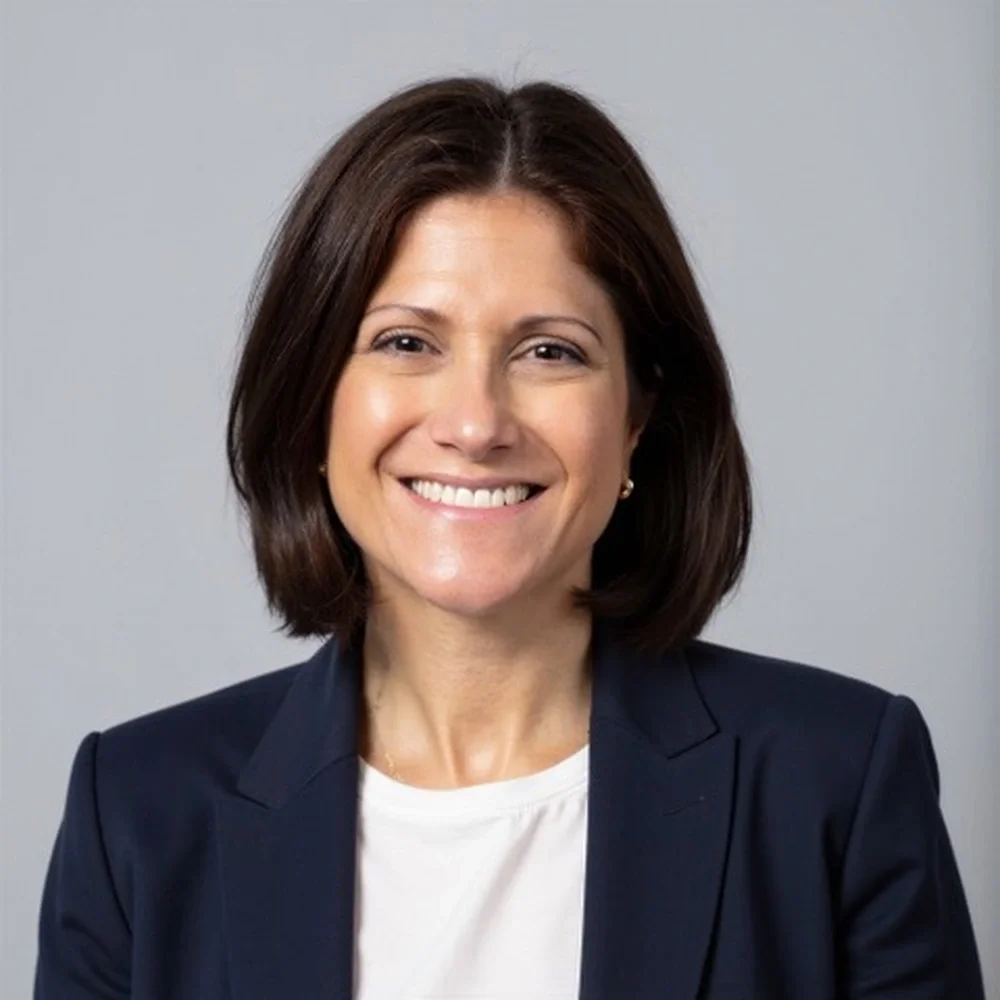
When Sarah Assian, PA-C, (BS, 2008, Molecular & Cellular Biology) got the call to join the State Medical Board of Illinois, she found out she was nominated by a colleague whom she’d lost touch with for several years. Despite the infrequent communication, Assian had evidently made enough of an impact to deem her worthy to serve in one of the state’s highest medical offices.
“You never know the impression you’ll have on someone,” Assian told the School of MCB two months after she was appointed to the Board — the latest entry in a career of serving others: her students on the southwest side, colleagues in Türkiye and Stony Brook, New York, patients in Chicago, and fellow Illinois citizens.
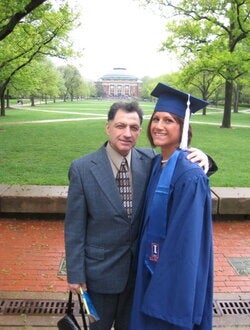
Assian had a quintessential undergraduate education at Illinois. She had plans to apply to medical school; she studied hard, learning the discipline, persistence, organization, and focus that an MCB major demands. Like many, she took one of MCB’s more challenging courses more than once. “I took organic chemistry again for a better grade,” Assian said. “It was fun to have an excuse to hang out in Champaign for a summer, but not necessarily taking orgo again.”
Assian has put her hard-earned skills to work in a career of service that began as an MCB student mentoring underserved children in the Illini Mentoring Program. “I would meet once a week with my mentee, who was a 7- or 8-year-old girl, at a library,” Assian said. “I got to know her pretty well. That experience sparked an interest in serving my community.”
Assian put her pre-med plans on hold when she was presented with the opportunity to further impact her community. Or at least one close by. As a Teach For America Corps Member post-graduation, Assian taught science at Gage Park High School on the southwest side of Chicago. It was not 40 miles from where she grew up in the suburbs.
Gage Park enrolls mostly Hispanic and Black students and is vastly under-resourced according to U.S. News & World Report; its graduation rate is 63%. “That experience basically changed my entire trajectory. I am who I am today because of it,” she recalled. “It made me want to practice medicine in a community similar to Gage Park: urban and underserved.”
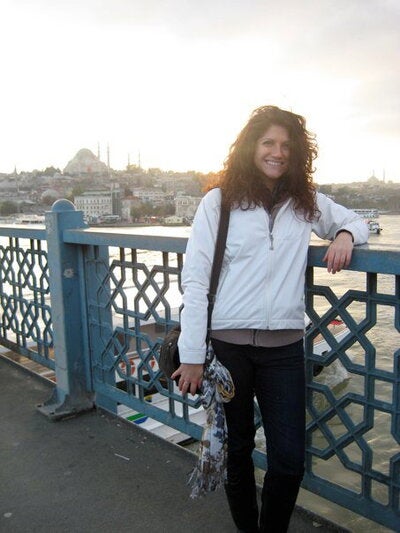
After her two-year Teach For America commitment, Assian wanted to start practicing medicine as soon as she could. But because of application deadlines, she had a free year before she could start PA school — one which she spent on a Fulbright scholarship teaching conversational English to physicians in Türkiye. Assian spent nights in her Kayseri apartment submitting applications. She was accepted to Stony Brook University in New York in 2011.
Assian became a licensed Physician Assistant in 2013, first in New York, and eventually returned to Illinois in 2016. Ten years later, she now helps approve those licenses. The Illinois State Medical Board is a non-partisan entity composed of 17 members appointed by the governor, evenly split by party, from both downstate and the Chicago area, and of every medical stripe: MD, DO, DC, PA-C, along with members of the public.
In addition to approving medical licenses, the Board lends its expertise on cases dealing if physicians were within the limits of standard medical care or engaging in medical malpractice. “It sounds like that work would be a black and white thing, but it’s actually a very grey area,” Assian said. “Even if someone’s applying for a medical license, that isn’t a cut-and-dry situation if they’re coming from an international medical training program.” It’s Assian’s and her fellow board members’ job to determine if that program is comparable to one completed in the US. They meet twice monthly.
Assian spends the other 28 days of the month treating patients and working with an interdisciplinary team in the Department of Infectious Disease at Cook County Hospital in Chicago. Cook County Health treats hundreds of patients every day, regardless of their ability to pay. Assian primarily works with people living with HIV. Many of them are members of the LGBTQIA+ community.
Cook County Hospital has a rich history of treating HIV patients and remains one of the final bastions treating the disease in the Chicago area today, despite over 40,000 Illinoisans living with HIV. Assian recalls trainees from nearby hospitals befuddled by the amount and complexity of HIV patients Assian’s team treats.
Despite being a largely manageable diagnosis, there’s still misconceptions regarding HIV, Assian said.
“I can say, as someone who didn’t manage HIV before this, that it’s definitely still something that people get a little worried about managing it in the medical community,” Assian said. “There’s still a decent amount of misunderstanding and mistrust and stigma.”
So, instead, Assian provides care with understanding and trust and respect. As she has throughout her career: on the State Medical Board, in Türkiye, with Teach For America in Gage Park, all the way back to her undergrad days in the Illini Mentoring Program and in the School of MCB.
Without the latter, she mentioned, Assian would not have the expertise to confidently tell her patients at CCH, some newly diagnosed with HIV, “You are going to live a full, long, and normal life.”