2010-09-24
- Assistant Professor of Cell and Developmental Biology Kannanganattu Prasanth is corresponding author of "The Nuclear-Retained Noncoding RNA MALAT1 Regulates Alternative Splicing by Modulating SR Splicing Factor Phosphorylation," published in Molecular Cell.
News

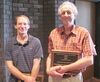 2010-09-22 - On Friday, September 10, the MCB Faculty Excellence Award was presented to Professor of Biochemistry, Biophysics and Computational Biology, and Plant Biology Colin Wraight; and to Professor of Microbiology James Imlay.
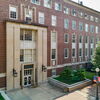 2010-09-10 - Professors of Biochemistry and Biophysics and Computational Biology Colin Wraight and Stephen Sligar are involved with a team of researchers who have created solar cells that use proteins from the cellular machinery of plants to repair themselves.
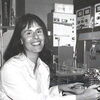 2010-09-10 - Swanlund Professor of Molecular and Integrative Physiology and Cell and Developmental Biology Benita Katzenellenbogen is among three University of Illinois faculty funded by a new grant.
 2010-09-10 - Rachel Smith-Bolton has accepted a faculty position with the Department of Cell and Developmental Biology. Professor Smith-Bolton comes to Urbana from the University of California at Berkeley.
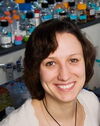 2010-09-10 - Assistant Professor of Biochemistry and Howard Hughes Medical Institute Early Career Scientist Maria Spies appears in LAS News, a publication of the College of Liberal Arts and Sciences.
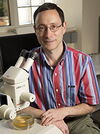 2010-08-26 - Associate Professor of Cell and Developmental Biology and Howard Hughes Medical Investigator Phil Newmark is featured in an article in the HHMI Bulletin.
 2010-08-23 - Assistant Professor of Cell and Developmental Biology Prasanth Kannanganattu is co-lead author on "A long nuclear-retained non-coding RNA regulates synaptogenesis by modulating gene expression," now appearing in advance online publication in Embo Journal.
 2010-08-10 - One of the largest and most comprehensive collaborations to understand the structure and dynamic function of membrane proteins was officially launched Tuesday with a 5-year, $22.5 million grant from the National Institute of General Medical Sciences. The international team of scientists funded by...
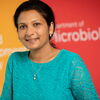 2010-08-09 - Assistant Professor of Cell and Developmental Biology Supriya Prasanth is lead and co-corresponding author of a paper published in the Proceedings of the National Academy of Sciences, "Human origin recognition complex is essential for HP1 binding to chromatin and heterochromatin organization." The...
 2010-08-06 - Assistant Professor of Biochemistry Lin-Feng Chen and colleagues have discovered a mechanism by which Helicobacter pylori, the only known cancer-causing bacterium, disables a tumor suppressor protein in host cells.
-
2010-07-26 - Of the approximately 100 cases that the Campus Committee on Promotion and Tenure reviewed this year, Associate Professor of Biochemistry Emad Tajkhorshid's dossier was one of just four recognized as exceptional in terms of quality of work and overall achievement.
-
2010-07-01 - A team of researchers, including Assistant Professor of Cell and Developmental Biology Craig Mizzen and Professor of Molecular and Integrative Physiology Ann Nardulli, has published a study in the Journal of Cell Biology entitled "Histone H1 phosphorylation is associated with transcription by RNA...
-
2010-06-24 - Swanlund Professor of Molecular and Integrative Physiology and Cell and Developmental Biology Benita Katzenellebogen contributed to a study led by University of Texas Southwestern Medical Center that pinpointed a set of biological mechanisms through which estrogen confers its beneficial effects on...
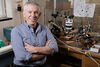 2010-06-07 - Professor of Molecular and Integrative Physiology and Neuroscience Rhanor Gillette and colleagues have published a paper in the Journal of Neurophysiology: "Nitric oxide potentiates cAMP-gated cation current by intracellular acidification in feeding neurons of Pleurobranchaea."