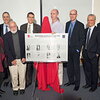
Ms. Brandyberry is the recipient of the College Award for Excellence in Undergraduate Advising; Professor Rivier is the recipient of the LAS Dean’s Award for Excellence in Undergraduate Teaching.
A number of current and recent graduate students and postdoctoral scholars have applied for and won prestigious awards and fellowships. The awardees reflect the breadth of outstanding research at UIUC and the quality of students and researchers attracted to the School of Molecular and Cellular...
The University of Illinois at Urbana-Champaign (UIUC) was officially named a Milestones in Microbiology site by ASM on 16 October 2015, in recognition of the many major accomplishments of UIUC microbiologists whose seminal discoveries significantly increased biological understanding, advanced the...
The Department of Biochemistry and the School of Molecular and Cellular Biology congratulate Professor David Shapiro, who has been named the Eugene Howe Scholar in Biochemistry.
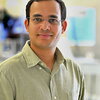
Assistant Professor Auinash Kalsotra has been appointed, pending Board of Trustees approval, as a prestigious Fellow of the University of Illinois Center for Advanced Study (CAS) for the academic year 2016-2017.
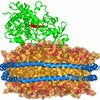
New findings by Professor Stephen Sligar and colleagues have outlined the structural determinates of a chemical transformation that carries profound implications for the potential design of a mechanism-based inhibitors for the treatment of prostate cancer. The research is published in PNAS.
Dr. Joanna Shisler, associate professor of microbiology and researcher at the School of Molecular and Cellular Biology, Beckman Institute, and Carl R. Woese Institute for Genomic Biology, is the recipient of a National Institutes of Health (NIH) grant for research using innovative approaches to...
The G.William Arends Professor of Molecular and Cellular Biology and professor of microbiology was selected for his “pioneering discoveries on the genetics and enzymology of methanogenesis by archaea and the mechanisms for aerobic methane formation in marine surface waters.”
Assistant professor Auinash Kalsotra and collegues report that liver cells utilize a mechanism called "alternative splicing," which alters how genes are translated into the proteins that guide postnatal organ development. Their findings are published in Nature Communications.