Request information Degree requirements Apply Advanced Electives
We train graduate students to become skilled and creative biochemists and molecular biologists. We have outstanding resources in our internationally recognized faculty, graduate students, and research facilities. Our graduate program not only allows our research students to learn the latest techniques, but also fosters their development as independent scientists. With a PhD in Biochemistry from Illinois, you will be well-prepared to launch a career in academia or industry. Our alumni are leaders in industrial laboratories, research institutes, and government agencies, as well as in teaching, research, and administration in colleges and universities.
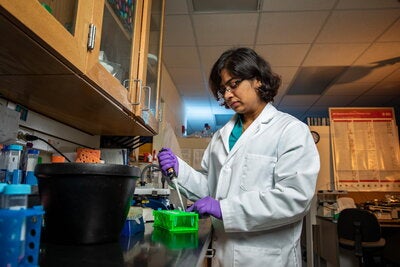
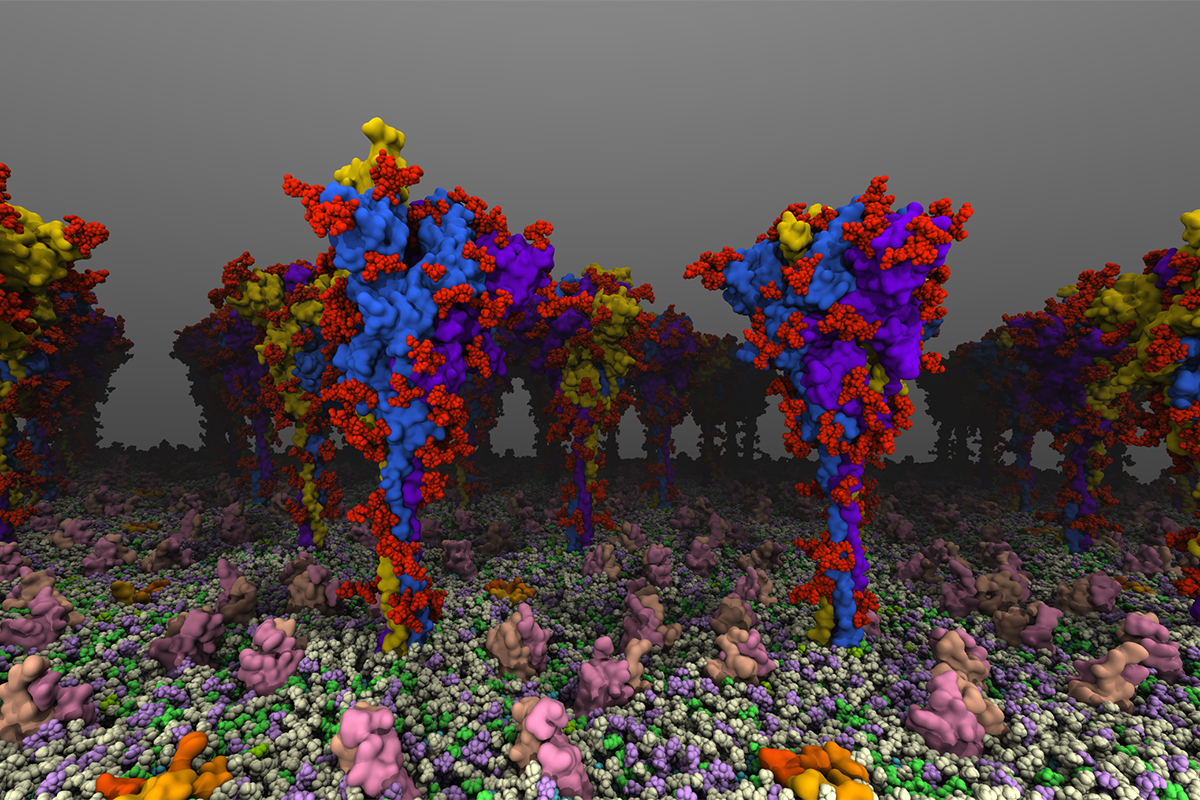
As a PhD student in the Department of Biochemistry, you will pursue research alongside brilliant faculty and graduate students while advancing the frontiers of this exciting field. Our labs encompass a variety of areas, including biological chemistry and molecular biology: physical approaches to the structure and function of proteins, nucleic acids, and carbohydrates, including structural biology (Cryo-Em, x-ray crystallography, etc.); genomics, enzymology; membrane biochemistry and protein-lipid interactions; protein-nucleic acid interactions; molecular biological approaches to gene organization and expression; immunology; microbial physiology, and signal transduction. We collaborate with peers at units across campus and around the world.
At the U of I we boast world-class facilities, equipment, and technology. The department is a close-knit community which holds numerous events throughout the year, such as an annual research conference and graduate research seminar series.
Admission & your first year
The Department of Biochemistry is part of the School of Molecular & Cellular Biology. Prospective Biochemistry PhD students should apply directly to the MCB PhD Program.
During your first semester, you will rotate through three laboratories to learn experimental techniques and the information you need to choose a research project. You will then select a research adviser and formally join the graduate program by the spring semester of your first year.
Core Courses
MCB 581, 582, 583 Lab Rotations (3 hours max from 9 hours registered) – 1st semester
MCB 501: Advanced Biochemistry (4 hours) – 1st semester
MCB 502: Advanced Molecular & Cell Biology (4 hours) – 1st semester
MCB 540 Scientific Writing (3 hours) – 2nd year fall term
MCB 580 – Research Ethics and Responsibilities (1 hour) – 2nd year fall term
BIOC/MCB 555 – Analysis of Biochemical Literature (2 hours) – 2nd year fall term
Physical Chemistry sequence:
MCB 493 PBC/BIOC 441 – Physical Chemistry Principles (4 hours) – if required
BIOC 446 – Physical Biochemistry (3 hours) – if required
BIOC 595(JC) – Journal Club (3 hours)
Balance of 32 hours of coursework to be completed from list of approved courses.
Financial support
All students accepted into the PhD program receive year-round financial support through fellowships, traineeships, or graduate assistantships, which provide a generous stipend as well as a full tuition and partial fee waiver. The department guarantees financial support to all students as long as they make satisfactory progress toward their PhD. Students are also encouraged to apply for extramural pre-doctoral fellowships for which they may be eligible, such as the National Science Foundation, Howard Hughes Medical Institute, Ford Foundation, and other fellowships.