The infinitely complex workings of the human brain have intrigued researchers for centuries. Our understanding of its workings have been limited, not by our curiosity, but by our tools. Now, with the growth of new molecular biology and genomics approaches, big data, and engineering advances that...
A number of current and recent graduate students and postdoctoral scholars have applied for and won prestigious awards and fellowships. The awardees reflect the breadth of outstanding research at UIUC and the quality of students and researchers attracted to the School of Molecular and Cellular...
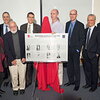
The University of Illinois at Urbana-Champaign (UIUC) was officially named a Milestones in Microbiology site by ASM on 16 October 2015, in recognition of the many major accomplishments of UIUC microbiologists whose seminal discoveries significantly increased biological understanding, advanced the...
Dr. Joanna Shisler, associate professor of microbiology and researcher at the School of Molecular and Cellular Biology, Beckman Institute, and Carl R. Woese Institute for Genomic Biology, is the recipient of a National Institutes of Health (NIH) grant for research using innovative approaches to...
The G.William Arends Professor of Molecular and Cellular Biology and professor of microbiology was selected for his “pioneering discoveries on the genetics and enzymology of methanogenesis by archaea and the mechanisms for aerobic methane formation in marine surface waters.”
Nearly 25% of the world’s population consumes fecally-contaminated water. This water includes bacteria and viruses.Viruses provide greater challenges for disinfection because of their sizes and physical properties. The importance of understanding viruses for safe drinking water is discussed in a...
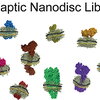
Congratulations to Stephen Sligar for his recent publication in PLoS One: “Nanoscale Synaptic Membrane Mimetic Allows Unbiased High Throughput Screen that Targets Binding Sites for Alzheimer’s-Associated Aβ Oligomers.” Using a High Throughput Screening (HTS) facility at NU, Sligar and colleagues...
The School of Molecular and Cellular Biology and the Department of Microbiology congratulate Dr. Brenda A. Wilson, professor of microbiology, on her 2015 Leadership Award, which she received from the YWCA of the University of Illinois at an awards ceremony on April 23rd.
The microbes could surrender to the harmless virus, but instead freeze in place, dormant, waiting for their potential predator to go away, according to a recent study by Associate Professor of Microbiology Rachel Whitaker in mBio.