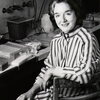
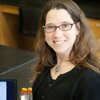
During her 40-year career, Abigail Salyers revolutionized how we think about the bacteria that live in the human intestinal tract, helped design antibiotic drugs, and provided a voice of reason in discussions on bioterrorism, transgenic plant safety, antibiotic resistance in medicine and...
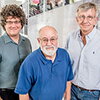
Professor of Microbiology John Cronan, Professor of Biochemistry John Gerlt and Professor of Chemistry Jonathan Sweedler, along with colleagues from two other institutions, teamed up to discover the role of an enzyme known as HpbD in its bacterial host, Pelagibaca bermudensis.
The College of Medicine at Illinois recognized Emeritus Professor of Molecular and Integrative Physiology Byron Kemper and Arends Professor Emerita of Microbiology Abigail A. Salyers for their excellence in research and teaching.
Department of Microbiology Professor William Metcalf has been appointed to the G. William Arends Professorship in Life Sciences for his accomplishments in research, education, and service.
The American Society for Microbiology (ASM) has selected Michelle Wegscheid, a senior in the Specialized Curriculum in Biochemistry, as a 2012 award recipient of the ASM Undergraduate Research Fellowship.
In a new study, Assistant Professor of Molecular and Integrative Physiology Kevin Xiang and colleagues show that the PGE2 stimulation attenuates the adrenergic-induced cardiac contractile response in animal hearts.
Not that long ago in a hot spring in Kamchatka, Russia, two groups of genetically indistinguishable microbes parted ways. They began evolving into different species – despite the fact that they still encountered one another in their acidic, boiling habitat and even exchanged some genes from time to...
A fundamental breakthrough in biological science occurred in 1977, and most biologists did not notice: a paper by Professor of Microbiology Carl Woese that compared sequence snippets derived from small subunit rRNAs of different organisms.