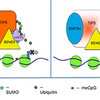
Prasanth and colleagues show that BEND3 directly binds to rDNA promoter in a sequence specific manner and induces chromatin modifications leading to a transcriptionally repressive chromatin environment.
The Smith-Bolton laboratory uses genetically induced tissue damage in the Drosophila wing primordium to study how a tissue responds to damage and regenerates. A study by graduate student Keaton Schuster has identified a gene, taranis, that is essential for protecting cell fate during regeneration....
The Ceman laboratory, with lead authors Phil Kenny and Miri Kim, have shown that FMRP is able to facilitate or suppress the translation of a subset of its target mRNAs by its interaction with the RNA helicase MOV10.
Disassembly of actin filaments is important for many processes that involve rapid reorganization of cell shape such as cell movement and division. Cofilin is a vital disassembly protein however one limitation of cofilin is that it can stabilize filaments at saturating concentrations....
The Prasanth laboratory, with post-doctoral associate and lead author, Arindam Chakraborty, have shown that mammalian NDR kinase mediates the hinge specific phosphorylation of HP1α preferentially at the G2/M phase of the cell cycle in Nature Communications.
A Team led by Martha Gillette, professor of Cell and Developmental Biology, Molecular and Integrative Physiology, Neuroscience and Bioengineering, has been awarded a BRAIN EAGER grant from NSF for a project titled “Multiscale dynamics and emergent properties of suprachiasmatic circuits in real time...
Professor of Cell and Developmental Biology and Howard Hughes Medical Institute Investigator Phillip Newmark and his colleague James Sikes have found an answer to a vexing biological riddle.
Three School of Molecular and Cellular Biology professors have been awarded research funding for collaborative projects between University of Illinois and Mayo Clinic researchers by the Mayo Clinic/University of Illinois Strategic Alliance for Technology-Based Healthcare.