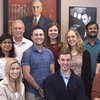
The Department of Biochemistry held its second annual graduate student award symposium on Friday, April 6th.
The symposium featured two speakers who received awards: Dr. Harris, the recipient of the 2017 Biochemistry Trust of Urbana Award for Excellence in Graduate Studies, and William Arnold, who...
The Kranz lab and colleagues have recently publish a trio of papers that describe the engineering of receptors that can mediate specific and potent destruction of cancers by T cells.
Using molecular dynamics simulations, the Tajkhorshid lab computationally modeled the complete structure of the active AMPA receptor with hydrated ions moving through an open pore. Together these findings, published in Cell, show how AMPA receptor regulatory proteins enhance the potency of agonists...
For decades, MCB and the University of Illinois have been at the forefront of understanding the role of estrogen and the estrogen receptor (ER) in causing breast cancer. This is essential work: Breast cancer is the most commonly diagnosed cancer in women, affecting roughly one in eight women in the...
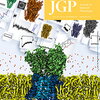
The Grosman and Tajkhorshid labs collaborate on "Chasing the open-state structure of pentameric ligand-gated ion channels." Their findings are presented as the cover story in the December Issue of The Journal of General Physiology.
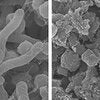
A new shape-shifting polymer can target and kill Helicobacter pylori bacteria in the stomach without killing helpful bacteria in the gut. Such a treatment could improve the digestive health of billions of people worldwide who contract H. pylori infections.
Dr. Susan Martinis, head of biochemistry, started her new role as interim vice chancellor for research on Oct. 16, 2017.
“Professor Martinis has earned a reputation here at Illinois as a collaborative scholar and consultative leader who gets work done. These qualities make her an ideal fit for...
Nair, a professor of biochemistry in the School of Molecular and Cellular Biology and director of the Center for Biophysics and Quantitative Biology, is a leader in studying how bacteria can make antibiotics and other medicinally relevant molecules.
The grant to Prof. Kalsotra provides $300,000 over a three-year period to study the molecular basis for cardiac arrhythmias in Myotonic Dystrophy, a multi-systemic disease that affects about 1 in 8000 people with no cure.