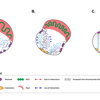
Researchers from the University of Illinois School of Molecular & Cellular Biology are examining the influence on nuclear pathways from the molecular chaperone, TCP-1 Ring complex (TRiC).Cell and developmental biology professor Brian Freeman’s lab focuses on chaperonins like TRiC, which help...
In a new publication, University of Illinois scientists have begun to unravel how nuclear type 1 myosin influences the cell nucleus. Recently, they have found that the protein was essential for cell division and plays a critical role in shaping the activities of nuclear organization. The...
The School of Molecular & Cellular Biology is pleased to announce that Dr. Andrew Belmont, professor of cell and developmental biology has been named a Gutgsell Endowed Professor. Gutgsell endowed appointments were...
In a new publication, University of Illinois School of Molecular & Cellular Biology researchers provide the first-ever comprehensive map of genomic regions near polycomb bodies in bone cancer cells. And, while mapping the genome around the polycomb repressive complex, the team led by professor...
Before Dr. Surabhi Sonam could be called “doctor,” wife, mother, or research specialist at the Roy J. Carver Biotechnology Center, she was a member of the CDB Graduate Student Association.In 2017, she and other members of the association had the idea of inviting alumni back to speak so current MCB...
One day, on assignment researching non-canonical functions of aminoacyl-tRNA synthetases — housekeeping enzymes essential for protein synthesis — Pallob Barai noticed an intriguing pattern.“A particular AARS enzyme, TARS1, was found to be correlated with poor patient survival in different cancers,...
New research from the K.V. Prasanth lab, in collaboration with scientists across the University of Illinois and other institutions, has revealed that gene positioning near nuclear speckles — key nuclear domains that promote gene expression — along with the mechanistic functions of the non-coding...
Ask any scientist and they’ll tell you what a joy it is to discover something they didn’t know they didn’t know. “The best parts of science tend to be serendipitous,” said the School of Molecular & Cellular Biology’s Jhewelle Fitz-Henley. “The things that you find out, you’re like, ‘I did not...