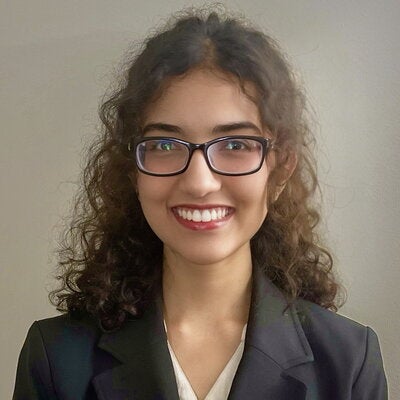
Anuprova Bhowmik is a fourth-year Molecular and Cellular Biology and Computer Science + Chemistry student at the University of Illinois. This is her first-hand account of being an undergraduate researcher in an MCB lab and a recipient of the 2026 Berkowitz Summer Undergraduate Research Fellowship.
Being both a part of the Kalsotra Lab and a recipient of the 2026 Berkowitz SURF program have been the single most enriching experiences of my time at Illinois, and I could not be more grateful for the support I have received here.
As someone who went to high school in Champaign, I was fortunate to have access to the opportunities on campus long before I started college. I had read a couple of articles about the growing role of technology in medicine, and my interest in bioinformatics led me to search for labs that would be willing to take on someone with a computational background. Thankfully, Dr. Auinash Kalsotra’s lab did so during my last semester in high school.
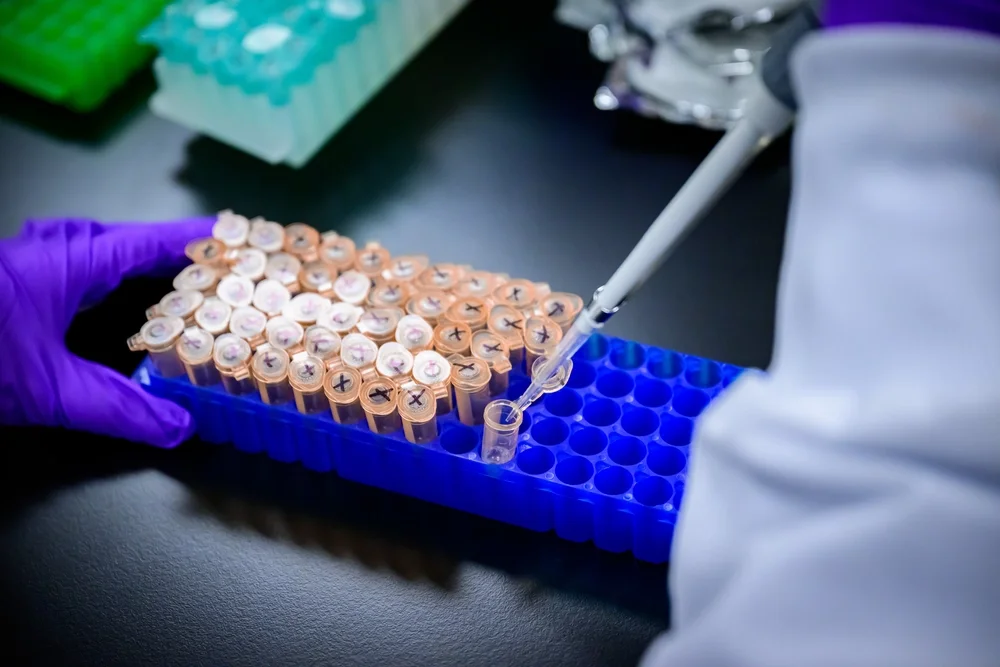
Although Dr. Kalsotra does not primarily run a computational lab, he encouraged me to develop a project with my mentor, Biochemistry PhD student Diptatanu Das, that complemented the lab's work on alternative splicing in the liver. Alternative splicing is a process that allows cells to make different versions of proteins from the same gene, helping the liver carry out its many specialized functions.
Diptatanu's patience allowed me to grow into someone who could think critically about the biological aspects of our work instead of focusing only on the computational side. In fact, I enjoyed the biology so much that I eventually declared Molecular and Cellular Biology as a second major. Since then, I have had the opportunity to take incredible MCB courses that have strengthened both my research and academics — during the school year and over the summer.
As a newly minted MCB major, I was now eligible for the Summer Undergraduate Research Fellowship, which is supporting my research this summer. I applied because it gave me the opportunity to spend the entire summer focused on research while also staying close to my family in Champaign.
This summer as a SURF, I have started an entirely new project focused on developing a computational model to predict alternative splicing outcomes in the liver. It has been exciting to apply everything I have learned over the past few years to a different type of project, and I hope to continue this work throughout my senior year as the basis for my honors thesis.
My research as a SURF builds off the last three years in the lab where most of my work has focused on developing computational pipelines to analyze microscopy images and quantify changes in liver pathology, making it easier for our lab to answer biological questions from large imaging datasets.
For example, I have quantified scarring, fat accumulation, and how proteins are distributed within liver cells under different conditions, helping us better understand how disease affects liver health. I learned to use computational tools such as CellProfiler, ImageJ, and QuPath while taking advantage of the various microscopes available at the Institute for Genomic Biology.
The biggest lesson I learned, however, came from Diptatanu: look beyond the data analyses and understand the biology they represent. My desire to continue pursuing patient-centered research — seeing the biology behind the data, and the patient behind the biology — is something I’ll carry with me into my senior year, after I’ve graduated from Illinois, as I apply to medical school, and in my future career.