The Anakk lab has investigated the metabolic repercussions of deleting the scaffolding protein IQGAP1. These findings were published in a paper entitled "Identification of IQ motif-containing GTPase Activating Protein 1 as a regulator of long-term ketosis" in JCI Insight.
Mice with epilepsy have altered patterns of neuron activity in the portion of the brain that controls the reproductive endocrine system, University of Illinois researchers report in a new study.
The Prasanth lab has recently published a paper in Nucleic Acids Research titled “MIR100 host gene-encoded lncRNAs regulate cell cycle by modulating the interaction between HuR and its target mRNAs.”
New research conducted by biochemists at the University of Illinois has determined how damaged liver cells repair and restore themselves through a signal to return to an early stage of postnatal organ development. The findings are reported in the journal Nature Structural & Molecular Biology.
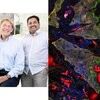
Using a suite of techniques both common and new to geology and biology, researchers, from left, M.D./Ph.D. student Jessica Saw, geologist and microbiologist Bruce Fouke, microscopy expert and plant biologist Mayandi Sivaguru and their colleagues made new discoveries about how kidney stones...
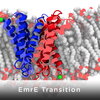
Each year, at least 23,000 people die from infections caused by antibiotic resistant bacteria in the U.S., according to the Centers for Disease Control and Prevention. Using computer modeling, researchers from the University of Illinois at Urbana-Champaign and Sandia National Laboratories are...
The Zhang and Pan labs recently published a joint paper in Nanoscale titled “Carbon dots with induced surface oxidation permits imaging at single-particle level for intracellular studies.”
In a new paper in the Journal of Cell Biology, researchers from the University of Illinois at Urbana-Champaign describe a new technique that can measure the position of every single gene in the nucleus to build a 3D picture of the genome’s organization.
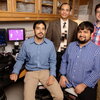
Molecular and integrative physiology professor Hee Jung Chung, postdoctoral fellow Eung Chang Kim, and their colleagues discovered that abnormal expression and phosphoinositide regulation of KCNQ/Kv7 potassium channels underlie neuronal hyperexcitability and injury in early-onset epileptic...
Prasanth’s lab published several papers on a particular lncRNA called MALAT1, with significant findings showing an important link between cancer and MALAT1. They found that when MALAT1 is overexpressed in breast cells, the cells form tumors. Conversely, when it is depleted in breast cancer cells,...