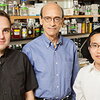
The Society’s highest honor, this annual award recognizes lifetime achievements and exceptional contributions to the field of endocrinology. Dr. Benita Katzenellenbogen is currently the Swanlund Chaired Professor of Molecular and Integrative Physiology, and Dr. John Katzenellenbogen is the Swanlund...
Biochemistry researchers in Dr. David Shapiro's lab, and a study team including researchers from the department of food science and human nutrition, the department of molecular and integrative physiology, the College of Medicine and the Cancer Center, have developed a new drug that kills estrogen...
An interdisciplinary research team, including molecular and integrative physiology professors Benita Katzenellenbogen and Milan Bagchi, has developed a new approach to treating endometriosis. Their research appears in Science Translational Medicine.
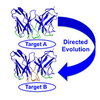
Graduate student Sheena Smith and Professor David Kranz of the Department of Biochemistry have developed an approach to discover T cell receptors that could be therapeutically useful against different cancers. In collaboration with graduate students Yuhang Wang and Javier Baylor and Professor Emad...
Biochemistry professor David Shapiro, M.D.-Ph.D student Neal Andruska, graduate student Xiaobin Zheng and their colleagues discovered a new mechanism by which estrogen contributes to the pathology of breast cancer. The findings are published in the journal Oncogene.
In a new study described in the journal Oncogene, Professor of Biochemistry Lin-Feng Chen and his team reveal how a key player in cell growth, immunity and the inflammatory response can be transformed into a primary contributor to tumor growth.
Assistant Professor of Biochemistry and Medical Biochemistry at the College of Medicine Lin-Feng Chen is corresponding author on a new study on RUNX3, a tumor suppressor in breast cancer.
A new study led by Professor of Microbiology Stephen Blanke, in Proceedings of the National Academy of Sciences, is the first to show how a bacterial toxin can disrupt a cell's mitochondria – its energy-generation and distribution system – to disable the cell and spur apoptosis (programmed cell...
Assistant Professor of Cell and Developmental Biology Kannanganattu Prasanth has been awarded a Research Scholar Grant from the American Cancer Society.
Swanlund Professor of Molecular and Integrative Physiology and Cell and Developmental Biology Benita Katzenellenbogen is among three University of Illinois faculty funded by a new grant.