Lactation is one of the most energetically demanding processes that a mammal undergoes in their lifetime. For example, food consumption can increase by up to 400% in rodents, while more modest increases in feeding are observed in lactating humans. While increased energy demand naturally drives a need for more calories, what is the underlying mechanism behind this behavior?
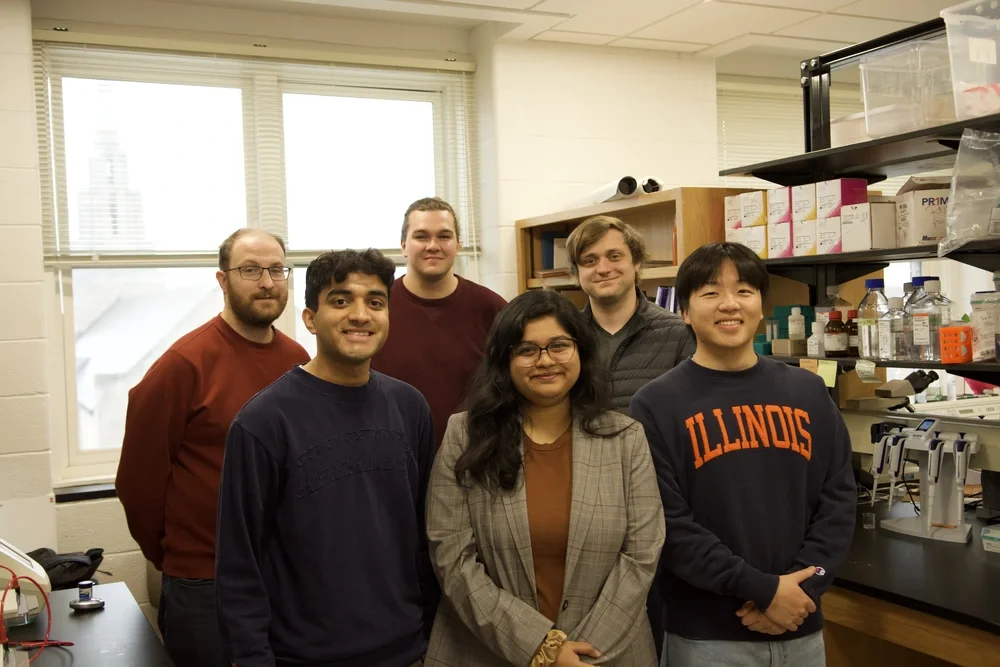
The Sweeney Lab, led by PhD candidate Tanya Pattnaik, investigated the neural mechanisms responsible for this intense maternal appetite. Their paper, “Lactation increases food seeking and palatable feeding through mesolimbic dopamine signaling in mice,” published in Cell Reports, reveals that the brain actively adapts its reward circuitry during nursing to seek out more food.
The brain’s mesolimbic dopamine pathway drives reward-seeking and maternal instincts, though its exact role in driving maternal food cravings remained a mystery for Sweeney’s group.
To better understand nursing mice’s motivation for food, the team places feeding devices inside their cages. The mice were rewarded with food pellets for every correct nose poke to the left.
The results were immediate and striking. Pattnaik highlights those lactating mice “performed more correct pokes during testing, while incorrect pokes were significantly reduced in lactating animals. Lactating animals were also significantly more accurate at poking at the correct nose-poke port compared to non-lactating control animals.”
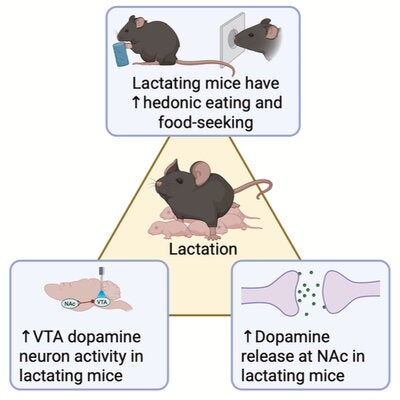
Instead of feeding in small amounts throughout the day, lactating mice ate drastically larger and more focused meals. Additionally, when assigned to work for their food, they completed significantly more successful pokes than their virgin control mice counterparts.
“We found that this isn't simply a matter of eating more,” explains Pattnaik. “Lactating mice were much more willing to work for food and showed a striking preference for highly palatable, high-fat and high-sugar foods. In other words, lactation appears to change not just hunger, but the drive to seek out and consume rewarding foods.”
To uncover how this occurs, the Sweeney lab looked beyond the hypothalamus and its role as the brain’s baseline hunger regulator. Suspecting that appetite during lactation involves more than simple caloric demand, the team focused their attention on the mesolimbic dopamine pathway: the brain’s reward engine.
“We identified a brain mechanism behind this shift,” says Pattnaik. “During feeding, lactating mice showed enhanced dopamine signaling in the nucleus accumbens, a key part of the brain's reward and motivation system.”
To track this activity in real time, the team used fiber photometry with fluorescent dopamine biosensors. Every time a lactating mouse began feeding, the sensors lit up, which confirmed the rise in dopamine release that chemically reinforced the act of eating.
However, this apparent surge during meals did not definitely prove that dopamine signaling caused this behavior. Rather, it could have simply been a byproduct of eating. To determine whether it was necessary, the team needed a way to selectively obstruct the dopamine signaling pathway.
The team was able to block dopamine receptors within the nucleus accumbens using targeted pharmacological inhibitors. In other words, by quieting the dopamine signal, both the craving and intense effort for food fell to normal, non-lactating levels.
The Sweeney lab has unveiled an essential neurological finding that allows female mammals to undergo the high energy expenditure associated with nursing. “The study was conducted in mice, so we don't yet know whether the same mechanism operates in breastfeeding women,” Pattnaik notes. “But increased hunger and food cravings are commonly associated with lactation in women, making it especially interesting to ask whether similar changes in reward circuitry occur in humans.”