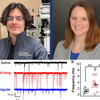
A new study from the University of Illinois further helps explain links between epilepsy and reproductive comorbidities. The Christian-Hinman laboratory's findings were published in the journal Neurobiology of Disease.
Breast cancer is categorized into three major subtypes: hormone receptor-positive, HER2-positive, and triple-negative. Although there are targeted therapeutic approaches for the first two, there are limited options for triple negative-breast cancer patients. In a new study, researchers have...
The Graduate College is excited to announce the first cohort of fellows participating in its Career Exploration Fellowship Program. The program connects doctoral students with university administrative units for substantive, mentored work experiences where they can develop skills and explore...
Interdisciplinary researchers at the Beckman Institute, including Molecular & Integrative Physiology Professor Dan Llano, received federal funding to develop ultrasound imaging methods for studying the neurovascular changes underlying Alzheimer's disease. Their low-cost, widely accessible...
Two researchers from the School of Molecular & Cellular Biology at the University of Illinois Urbana-Champaign have established a theoretical framework and practical protocol to translate the ligand-binding ability of ion channels into a holistic understanding of ion-channel function by...
Researchers at the Beckman Institute developed a technique for producing super-resolution ultrasound images of tissue microvasculature in just a fraction of the time previously needed. Their work could enable future research into the neurovascular mechanisms behind conditions like Alzheimer’s...
Life is extraordinary. So is the work we do. In a brand new podcast series, Decoding Life with MCB, the School of Molecular and Cellular Biology at the University of Illinois Urbana-Champaign explores the impact of our students, faculty, staff, and alumni in each episode.
A new study by researchers at the University of Illinois Urbana-Champaign suggests the overexpression of a particular gene could serve as a risk factor for Alzheimer’s disease. Their findings could also lead to better understandings of the links between Alzheimer’s disease, Fragile X Syndrome, and...