The Cancer Center at Illinois and the Microbial Systems Initiative held the Cancer and Microbes Workshop as part of a new partnership formed between the CCIL and the MSI to promote collaboration at the interface of microbial sciences and cancer research.
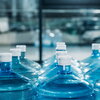
Chemical disinfection makes water from both natural sources and wastewater streams drinkable; however, the process also creates byproducts, not all of which are understood or regulated. A new study from University of Illinois Urbana-Champaign researchers has found that one byproduct disrupts...
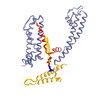
Researchers at the University of Illinois Urbana-Champaign are hopeful their findings on the gating mechanisms behind epilepsy-associated potassium channels could provide a foundation for new therapeutic strategies for treating epilepsy, especially in young patients. Their research was recently...
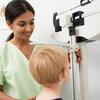
For the past few decades, scientists have observed a trend of increased height and younger age of puberty onset in humans. Now, research outlining a new pathway in humans linking body fat to puberty onset and growth could provide an explanation as to why these changes are occurring. Their findings...
Thanks to the installation of a cryogenic electron microscope at the University of Illinois, researchers are exploring what was once hidden or difficult to study at the molecular level.
Researchers at the University of Illinois Urbana-Champaign can now rapidly isolate and chemically characterize individual organelles within cells. The new technique tests the limits of analytical chemistry and rapidly reveals the chemical composition of organelles that control biological growth,...
The Department of Molecular & Integrative Physiology in the School of Molecular & Cellular Biology is pleased to welcome new faculty member Patrick Sweeney!
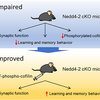
Researchers report that infantile spasms, a rare but serious seizure disorder in babies, appear to be the result of a molecular pathway gone awry. In their study of a mouse model of the disorder, the researchers discovered that genetic mutations associated with the disease impair a pathway that is...