Professor of Molecular and Integrative Physiology, Jongsook Kim Kemper and the first and co-corresponding author, Young Kim, co-author Sangwon Byun, and colleagues demonstrated that Aromatic Hydrocarbon Receptor (AHR) and the orphan nuclear receptor, Small Heterodimer Partner (SHP), have an...
New findings suggest that novel down-regulation of GIRK channels by caspase-3 may contribute to NMDAR-dependent hippocampal atrophy following chronic epileptic seizures
Dan Llano was recently appointed the Benjamin R. and Elinor W. Bullock and Edwin E. and Jeanne Bullock Goldberg Professorial Scholar in the Department of Molecular and Integrative Physiology in the School of Molecular and Cellular Biology. Llano is an associate professor in MIP and a member of the...
Benita Katzenellenbogen has delved into the causes and treatments for breast cancer and other hormone-dependent cancers for virtually her entire career. Her tireless work in the field has established her as a world-renowned expert.
The Anakk lab explored the mechanism by which the liver can be protected from developing fatty liver disease. This work was also published in Hepatology and led by two former undergraduates of the MCB program, Oludemilade Akinrotimi (Demi) and Ryan...
Using mouse models that resembled the clinical cholestasis, or very high levels of bile acids in the liver, Dr. Sayee Anakk, with graduate student and first author Bhoomika Mathur, observed the effect of cholestasis on a key indicator of heart health.
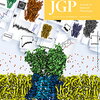
The Grosman and Tajkhorshid labs collaborate on "Chasing the open-state structure of pentameric ligand-gated ion channels." Their findings are presented as the cover story in the December Issue of The Journal of General Physiology.
The study, reported in Nature Communications, identifies new potential drug targets that could inhibit the creation or actions of the dangerous cholesterol byproduct.
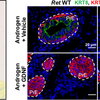
A new study published in Development by Assistant Professor Eric Bolton and Research Associate Hyun-Jung Park reveals that glial cell line-derived neurotrophic factor (GDNF), which signals through activation of RET tyrosine kinase, inhibits androgen-induced development of the mouse prostate gland.
Professor Bagchi is the Deborah Paul Professor of Molecular and Cellular Biology and current department head of Molecular and Integrative Physiology. Bagchi is an accomplished scholar and leader, and has provided a clear strategic vision statement for the research and teaching missions of MCB.