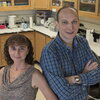
Molecular and Integrative Physiology Professor Jongsook Kemper, postdoctoral fellow Sangwon Byun (leading author of the study), research scientist Young Kim, and colleagues publish results in the EMBO Journal.
Lysosome-mediated autophagy is essential for cellular survival by recycling cytoplasmic components under nutrient-deprived conditions and removing damaged organelles in cells, but must be suppressed in nutrient-rich conditions to prevent unnecessary breakdown of cellular components. Molecular and...
Epilepsy is a medical condition characterized by spontaneous seizures due to hyperexcitability of brain neurons. Assistant Professor Nien-Pei Tsai, graduate student Jiuhe Zhu and colleagues uncovered that an insufficient function or mutations of a novel epilepsy-associated gene Nedd4-2 leads to...
A new era has dawned in understanding neuropathological disorders such as epilepsy, schizophrenia, depression, and autism spectrum disorders. These disorders, traditionally classified in the Diagnostic and Statistical Manual of Mental Disorders by the American Psychiatric Society, are now being re-...
Frank continues to visit the Department of Molecular and Integrative Physiology and to lend his support and expertise. “The Department of Molecular and Integrative Physiology is a small, but strong department, that is central to the research and educational missions of the School of MCB and the...
The infinitely complex workings of the human brain have intrigued researchers for centuries. Our understanding of its workings have been limited, not by our curiosity, but by our tools. Now, with the growth of new molecular biology and genomics approaches, big data, and engineering advances that...
The competition draws entrants from across the College, and entrants are challenged to explain their graduate work in 3 minutes with only 2 slides. Presentations were scored on delivery, clarity, effectiveness of visual material, and accessibility of language.
Here, the authors present compelling evidence for the critical involvement of ionized side chains—whether pore-facing or buried—rather than backbone atoms and propose a mechanism whereby not only their charge sign, but also, their conformation determines charge selectivity.
Dr. Ting Fu, a recently graduated MCB doctoral student from Prof. Jongsook Kemper's lab, has received the Salk Alumni award to support her postdoctoral research at Salk Institute
A study published in Nature Communications by the Department of Molecular and Integrative Physiology’s Dr. Jongsook Kim Kemper and colleagues shows the role of RanBP2-mediated SUMO modification of an orphan nuclear receptor Small Heterodimer Partner (SHP) in maintaining bile acid (BA) homeostasis....