University of Illinois researchers have made a breakthrough discovery in the fight against liver cancer. Collaborators Lin-Feng Chen, Susan A. Martinis, and graduate student Xiaodan Lin found that decreasing protein levels of leucyl-tRNA Synthetase, known as LARS, impedes liver cancer cell multiplication.
Liver cancer is a highly challenging cancer to treat because of difficulties in early diagnosis and its high recurrence rate. It remains one of the top causes of cancer-related mortality worldwide and is the second leading cause of cancer-related death after lung cancer. The research team noted that LARS is highly expressed in liver tumors and associated with poor patient survival, thereby making LARS a promising therapeutic target for liver cancer.
“LARS helps liver cancer cells stay metabolically fit and continue growing,” said Lin-Feng Chen, professor of biochemistry and member of the Cancer Center at Illinois. “When LARS levels are lowered, cancer cells experience mitochondrial stress, accumulate damaging reactive oxygen species, activate autophagy, and, ultimately, enter a senescent state where they stop proliferating.”
How did the team identify LARS as a focus of their study?
“LARS has long been known as a housekeeping enzyme that is essential for cells to make proteins by attaching the amino acid leucine to its corresponding tRNA to translate the genetic code,” Martinis said. “However, LARS ‘moonlights’ with additional functions: for example, it can act as a nutrient sensor, that activates growth-promoting pathways such as mTORC1 in response to leucine availability. Elevated LARS expression has also been reported in certain cancers—including lung cancer and osteosarcoma—suggesting it may have cancer-promoting functions beyond protein synthesis.”
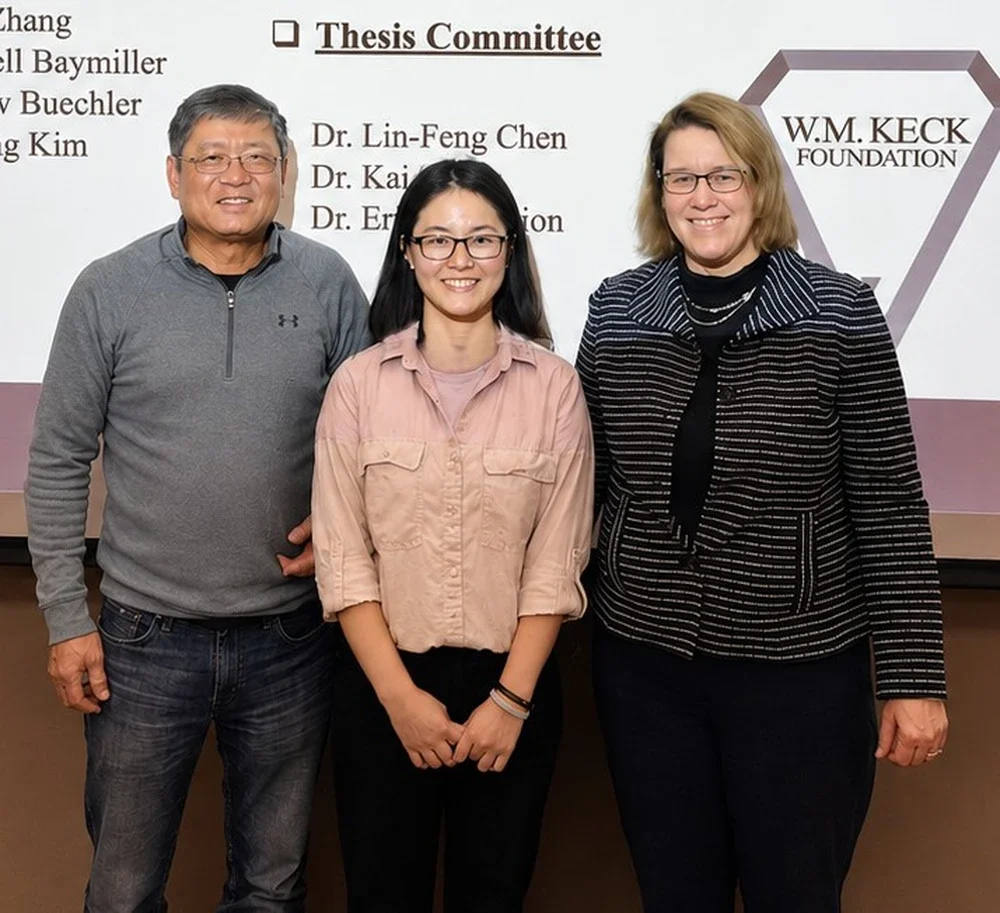
Pictured left to right: Lin-Feng Chen, Xiaodan Lin, Susan A. Martinis
Because LARS is both a protein-making enzyme and a nutrient sensor, Chen, Martinis, and Lin wanted to determine whether liver cancer cells depend on it.
“Our study sought to answer whether disrupting LARS levels could expose a weakness in liver cancer cells and provide a new avenue for therapy,” added Chen.
To perform this analysis, Lin relied on HepG2 liver cells, and expected that removing LARS from the HepG2 cells would slow cancer cell growth by shutting down protein production. “Surprisingly, protein production remained largely intact,” Martinis said. “Rather, the cancer cells became stressed, their mitochondria became dysfunctional, aged prematurely, and stopped dividing. This revealed an unexpected, influential role for LARS in helping cancer cells stay healthy and continue growing.”
Effectively, Chen, Martinis, and Lin discovered liver cancer cells’ reliance on LARS to cope with stress and continue growing.
This basic science discovery, lays a foundation for future translational work, which could lead to new targeted treatments and help doctors identify patients with more aggressive cancers who may benefit from personalized therapies. Chen and Martinis aim to understand the mechanistic details of how LARS contributes to liver cancer cell survival as a next step in their partnership to identifying a new treatment strategy.