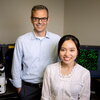
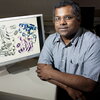
Biochemistry professor Nicholas Wu has been awarded the Ann Palmenberg Junior Investigator Award by the American Society for Virology. As a recipient of the award, Wu delivered a research talk at the 2022 ASV Annual Meeting. This year's conference is being held at UW-Madison from July 16-...
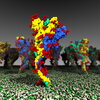
When the coronavirus causing COVID-19 infects human cells, the cell’s protein-processing machinery makes modifications to the spike protein that render it more flexible and mobile, which could increase its ability to infect other cells and to evade antibodies, a new study from the University of...
A natural small molecule derived from a cypress tree can transport iron in live mice and human cells lacking the protein that normally does the job, easing a buildup of iron in the liver and restoring hemoglobin and red blood cell production, a new study found.
The Departments of Biochemistry and Plant Biology are pleased to announce the creation of the Rabinowitch Lecture Series, which will feature guest speakers who have made key achievements in the two fields.
A mysterious ailment struck Deborah Paul’s younger brother, Tim, in 1982, when lymph glands all over his body suddenly became swollen. He recovered, but it took two years for doctors to finally figure out what had triggered the problem.
In 1984, Paul’s brother developed pneumocystis pneumonia—a...
Over the years, Westcott has come back to Illinois to teach six-week courses in biochemistry and gives seminars on working in the pharmaceutical industry to incoming students. His donations have supported several fellowships for graduate students in biochemistry, and Westcott makes it a point when...
The Center for Biophysics and Quantitative Biology was established in 1996 and has always made its home in the School of Molecular and Cellular Biology. The original idea of the center was proposed back in 1978 when Antony Crofts was recruited from the University of Bristol and appointed to lead...
Kalsotra’s research has focused on RNA, the workhorse cousin of DNA, which makes up the genetic instructions for living things. RNA is often viewed as important for messaging and other functions, taking DNA’s code and transporting it to and carrying out functions in cells. It’s often taken a back...
Thirteen years ago, when Lin-Feng Chen joined the Department of Biochemistry, he had his sights set on a specific protein that could both contribute to the growth of cancer and be a major factor in boosting the body’s immune system.
David Kranz, the Phillip A. Sharp Professor of Biochemistry in the School of Molecular and Cellular Biology, has been involved in T-cell research since working as a postdoctoral researcher at the Massachusetts Institute of Technology, involved in early discoveries about how T-cells might be used to...